Chimney FAQ
Sweeping, inspections, leaks, caps and fireplace safety.
Common questions from homeowners
How often should a chimney be inspected?
At least once a year. The National Fire Protection Association standard (NFPA 211) calls for an annual inspection of chimneys, fireplaces and vents, and a cleaning whenever buildup calls for it. How often you need sweeping depends on how much wood you burn and how dry it is.
How do I know my chimney needs sweeping?
Soot or flakes falling into the firebox, a campfire smell when the fireplace is cold, smoke drifting into the room, or a fire that won't draw well. If you suspect a blockage, don't light a fire until it's been checked.
Is chimney sweeping the same as chimney cleaning?
Most people use the two words for the same job: clearing soot, creosote and debris from the chimney and fireplace. Pick either one on the form and we'll go over what your chimney needs when we call.
What is creosote and why does it matter?
Creosote is a flammable deposit that wood smoke leaves inside the flue. It can be flaky, sticky, or hard and shiny, and heavy buildup can restrict airflow and feed a chimney fire. Burning dry, seasoned wood helps keep it down; hardened deposits can take more than ordinary brushing to remove.
What happens during a chimney inspection?
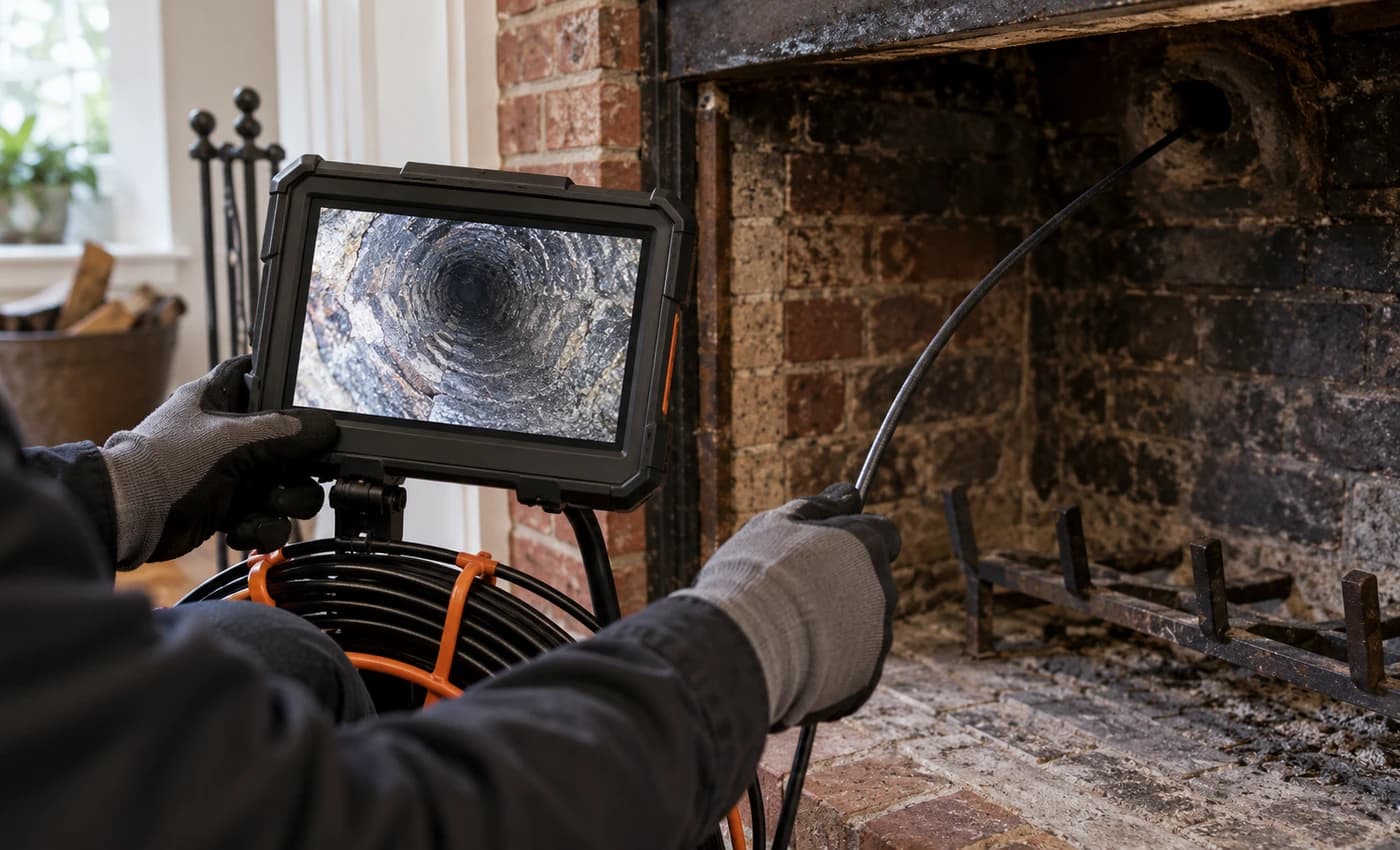
The accessible parts of the chimney and fireplace are checked for buildup, blockages, cracks and water damage. NFPA 211 describes three inspection levels. Level 2 adds a video scan or equivalent look inside the flue, and applies when a property changes hands or after a chimney fire.
Why does my chimney leak when it rains?
Possible sources include damaged flashing where the chimney meets the roof, a cracked crown, open mortar joints, or an uncovered flue. Water travels before it shows up, so the source should be found before anything is repaired.
Does my chimney need a cap?
It's a good idea for most chimneys. A suitable cap helps keep rain, leaves and animals out of the flue while letting exhaust escape. The right one depends on the flue's size and what vents through it.
What's the difference between a cap and a crown?
The crown covers the top of a masonry chimney around the flue and slopes to shed rainwater. The cap is the metal cover, usually with mesh sides, that sits over the flue opening. A cracked crown and a missing cap both let water in.
Why is the brick on my chimney flaking or crumbling?
That's usually spalling. Water absorbed by the brick expands when it freezes and breaks the face off. Repeated freezing and thawing can make the damage worse, so it's worth having looked at before it spreads.
What are the white stains on my chimney?
White powdery deposits are often efflorescence: salts left on the surface as moisture evaporates from brick and mortar. They show that water has been moving through the masonry, but not where it got in.
I hear scratching in the chimney. What should I do?
Don't light a fire. Birds, squirrels and raccoons often nest in open flues. Any animals and nesting material need to be cleared out before a cap goes on, so nothing gets trapped inside.
Smoke is coming into the room. Can I keep using the fireplace?
Stop using it until it's been checked. Smoke rolling into the room can mean a blockage or a draft problem, and either can bring carbon monoxide into the house. Keep working smoke and CO alarms on every level and outside sleeping areas. If a CO alarm sounds, get everyone outside and call 911.
What if I think I'm having a chimney fire?
Get everyone out of the house and call 911. Signs include a loud roaring or popping, dense smoke, and flames or sparks from the top of the chimney. Don't use the fireplace again until the chimney has been inspected.
I'm buying a home with a fireplace. Should the chimney be inspected?
Yes. NFPA 211 calls for a Level 2 inspection when a property changes hands, and a general home inspection may not include a full look inside the flue. Check the inspection report to see what was covered.
When should I book chimney service?
Routine sweeping and inspection are easiest to schedule before you plan to start using the fireplace. Leaks, loose brick or smoke coming into the room should be checked as soon as you notice them.
How long does a chimney cleaning take?
It depends on the flue size, how much buildup there is, and how easy the chimney is to reach. Ask about the expected time when we call you back.
Didn't find your answer?
Call (414) 300-3497 and ask, or request a quote and we'll call you back.
- Goes straight to our team
- We call you back before anything is booked
- Not sure which service? Choose "Not sure / Other" and describe it
Prefer to talk? Call (414) 300-3497